



CCRAN is grateful to our Expert Steering Committee for bringing their knowledge and expertise to the development of the 2026 Early Age Onset Cancer Symposium.

Dr. Ashamalla obtained his undergraduate Honours degree from the University of Guelph in Biomedical Sciences followed by a Master of Science degree at Queen's University. He then returned to Toronto and completed his medical degree at the University of Toronto. This was followed by a residency in General Surgery also at the University of Toronto. After completing his training in General Surgery, he went on to complete advanced training in Minimally Invasive Surgery. His clinical interest is devoted to Lower Gastrointestinal Surgical Oncology with a clinical focus on the Minimally Invasive approach. He is with the Surgical Oncology team at Sunnybrook Health Sciences Centre in the Odette Cancer Centre with a practice completely devoted to Lower Gastrointestinal Surgical Oncology with focus on the advancement of the Minimally Invasive technique within the field of Surgical Oncology. Dr. Ashamalla also heads up a one-of-a-kind clinic at the Odette Cancer Centre at Sunnybrook Health Sciences Centre – the Young Adult Colorectal Cancer Clinic - dedicated to serving the needs of the under 50 population, as they face the challenges and concerns related to a colorectal cancer diagnosis.

Dr. Raphael is a Medical Oncologist and the Early Age Onset CRC Cancer Clinic Lead at the Odette Cancer Centre at Sunnybrook Health Sciences Centre. His practice is dedicated to caring for patients with gastrointestinal cancers. He completed his medical degree at Queen’s University and his internal medicine and medical oncology training at the University of Toronto. He then completed an advanced cancer health services research fellowship and a Master’s of Science (Healthcare Quality, Risk and Safety) at Queen’s University. His research focus is on population-based cancer care. His research aims to identify ways to optimize the coordination and delivery of cancer care services, and to describe gaps in care, disparities in access to treatment, uptake of cancer therapies, and real-world toxicity and effectiveness. His research has already influenced practice guidelines globally and led to a new quality metric that is routinely captured by Cancer Care Ontario (“time to initiating adjuvant chemotherapy”). He is also the valued Co-Chair of CCRAN’s Scientific & Medical Advisory Board.
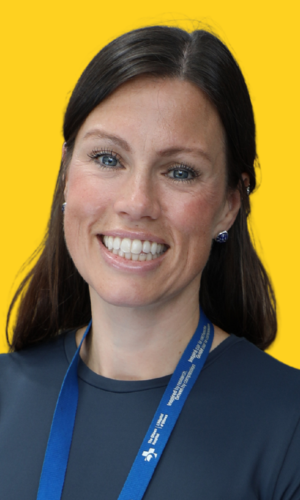
Sarah Cleyn is an Advanced Practice Nurse at The Ottawa Hospital Cancer Centre with over 17 years of experience across hospital, community, and international healthcare settings. Over the past five years, she has held progressive leadership roles, demonstrating a strong commitment to advancing patient-centred care, innovation, and system-level improvement in oncology.
Sarah is the co-founder and clinical lead of the Adolescent and Young Adult (AYA) Oncology Program at The Ottawa Hospital, a unique population-based model that proactively identifies and supports patients aged 15–39 from diagnosis through survivorship. Her work focuses on early needs assessment, risk stratification, and streamlined access to psychosocial, sexual health, fertility, and mental health supports. She has led the development of technology-enabled workflows, including automated patient identification and navigation tools, to improve care coordination and patient outcomes.
A passionate advocate for survivorship care transformation, Sarah is actively involved in regional and provincial initiatives, aligning her work with Ontario Health’s Cancer Survivorship Quality Standards and collaborating with partners such as POGO and Communities of Practice across Ontario. Her interests include nurse-led models of care, digital innovation in healthcare, and integrating clinical practice with system design.
Sarah is also engaged in research and program evaluation, with a focus on early intervention and outcomes measurement for AYA populations. She is committed to mentorship, knowledge translation, and building sustainable models that empower patients and care teams alike.
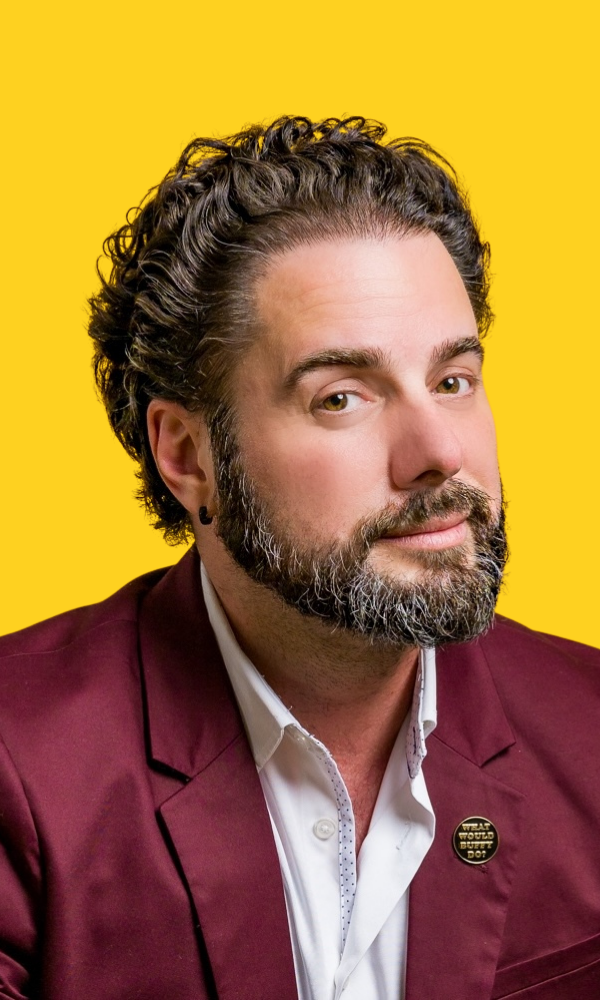
Peter is a seasoned advocate, speaker, and media professional dedicated to amplifying patient voices and advancing critical conversations around health, mental wellness, and social equity. As a cancer survivor and LGBTQ+ advocate, he brings over 15 years of experience in public speaking, patient advocacy, and community outreach. His work spans leadership roles in national organizations, impactful media engagements, and frontline advocacy supporting those affected by cancer and intimate partner violence. Peter is passionate about bridging gaps in healthcare access and fostering meaningful change through strategic storytelling and public engagement.
Dr. Christopher Lieu, MD, is a Professor in the Division of Medical Oncology, and Associate Director for Clinical Research at the University of Colorado School of Medicine in Aurora. He trained in internal medicine at the University of Colorado, where he also served as a Chief Medical Resident. He completed his fellowship training in medical oncology at the University of Texas MD Anderson Cancer Center in Houston and served as the Chief Medical Oncology Fellow. He currently serves as the Associate Director for Clinical Research and Director of GI Medical Oncology at the University of Colorado Cancer Center, the co-Chair of the National Cancer Institute Colon Cancer Task Force, and he serves as the Vice-Chair of the National Comprehensive Cancer Network (NCCN) Board of Directors.
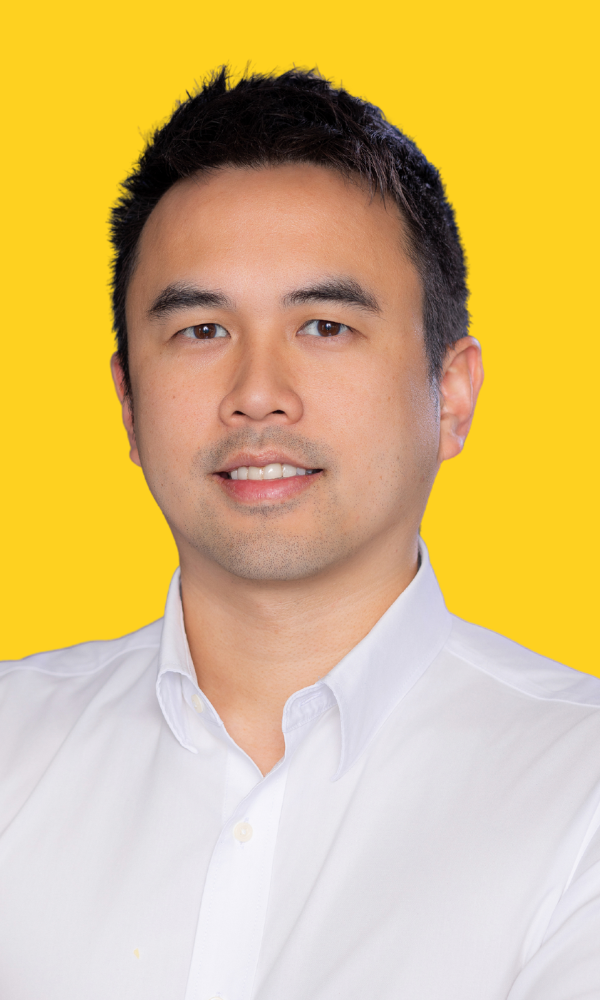
Dr. Vincent Quoc-Huy Trinh, MD, M.Sc., FRCPC, is a clinician-scientist and assistant clinical professor in the Department of Pathology and Cell Biology at Université de Montréal, and a staff pathologist at the Centre hospitalier de l'Université de Montréal (CHUM). He is a principal investigator at the Institute for Research in Immunology and Cancer (IRIC), where he directs the Digital Histology and Advanced Pathology Research Unit. He holds a Clinician Scholar award from the Fonds de recherche du Québec - Santé (FRQS).
Dr. Trinh completed fellowship training in gastrointestinal and liver pathology at Vanderbilt University, where he subsequently served as a research instructor before establishing his program in Montréal.
His research integrates computational pathology and spatial biology to resolve the cellular networks that govern progression in pancreatic ductal adenocarcinoma (PDAC) and colorectal cancer (CRC). A central focus is the PDAC stromal paradox, in which cancer-associated fibroblasts both restrain and support tumour growth. His group combines multiplex imaging and spatial transcriptomics with interpretable artificial intelligence and spatial statistics, so that model outputs remain biologically and clinically interpretable.
His contributions span both biological fields (Science Signaling, Cell Reports, Gastroenterology, Journal of Pathology) and computational pathology fields (CVPR, JPI, MIA). He co-developed COMP-691, a graduate course in computational pathology at Concordia University, and contributes to training the next generation of investigators at the interface of pathology, cancer biology and machine learning.
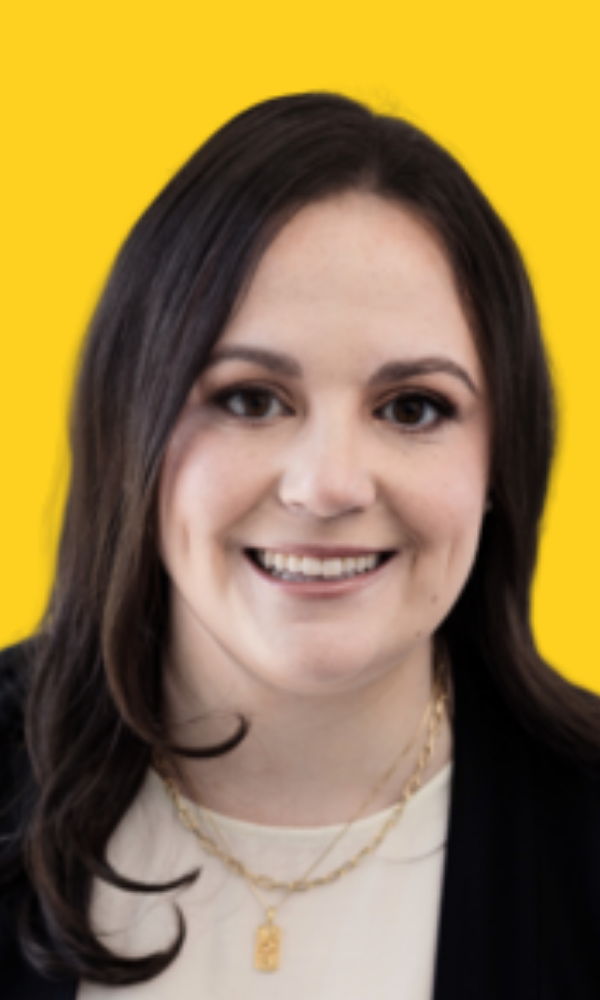
Dr. Perri Tutelman is a Clinical Psychologist and Assistant Professor in the Department of Psychology at the University of Calgary where she holds the Chair in Transdisciplinary Digital Mental Health. Her research is centred at the intersection of psychosocial oncology, pain, and digital mental health and is focused on developing novel patient-oriented interventions to support the wellbeing of children, adolescents, and young adults diagnosed with cancer. She works closely with patient partners to co-design research that addresses what matters most to patients and their families. Dr. Tutelman co-led the Adolescent and Young Adult Cancer Priority Setting Partnership initiative together with AYA CAN, to establish the Top 10 research priorities for adolescent and young adult cancer in Canada.


.png)

